What Is the Best Material for Water Bottle Stickers?
Have you ever stuck a cute custom sticker on your water bottle, only to watch it curl up and peel off after one trip through the dishwasher? It feels awful. You spent your money, waited for the package to arrive, and now your bottle looks worse than before you started. If you are asking what the best material for water bottle stickers is, you are not alone. Thousands of small shop owners, gift givers, and bottle lovers ask this same question every single day, usually right after they get burned by the wrong choice.
The good news is that you do not have to guess anymore. By the end of this guide, you will know exactly which materials hold up, which ones fall apart, and how to pick stickers that actually last.
Why the Right Sticker Material Actually Matters
A sticker is small, but the disappointment it brings is not. When a label peels off a bottle you gave as a gift, it feels personal. When it happens to a product you sell, it can cost you a customer for good.
Think about where water bottles actually live. They get tossed in gym bags, left in hot cars, dunked in pool water, and washed again and again. A sticker made from the wrong material simply cannot survive that kind of life.
What Happens When You Pick the Wrong Material
Cheap or mismatched sticker material usually leads to the same sad list of problems:
- Edges curl up within days
- Colors fade after a few weeks in the sun
- Sticky residue gets left behind when the label finally gives up
- Water sneaks underneath and turns the sticker cloudy or bubbly
- Customers leave reviews complaining about the quality, even if the bottle itself was great
None of that has to happen to you. It all comes down to choosing the right material from the start.
The Best Material for Water Bottle Stickers (And Why)
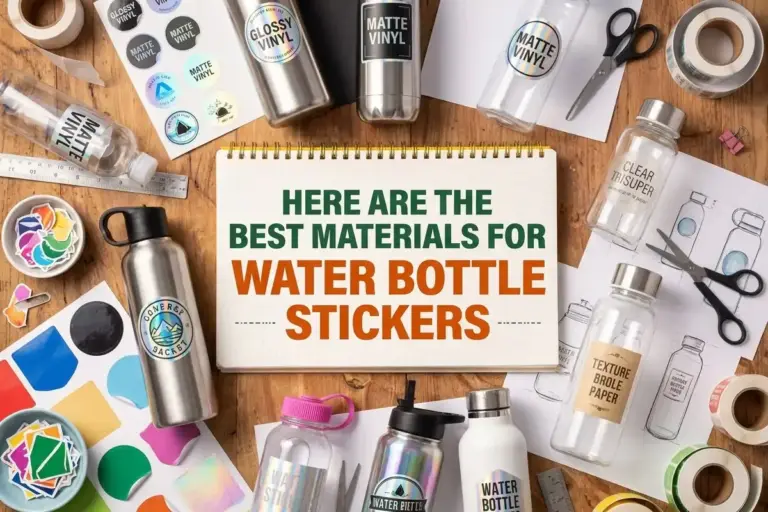
Here is the short answer. For most water bottles, the best material for water bottle stickers is waterproof vinyl, paired with a strong adhesive and a protective laminate on top. This combination is tough, flexible, and built to handle water, sun, and daily wear without giving up.
1) Vinyl Stickers for Water Bottles: The Top Choice
Vinyl stickers for water bottles are the gold standard for a simple reason. Vinyl is a soft, bendable plastic material that stretches slightly to hug the curve of a bottle instead of cracking or lifting at the edges.
It also resists water on its own, and when it is finished with a glossy or matte laminate, it becomes even tougher against scratches, sun fading, and daily handling. This is why most professional brands, from small Etsy shops to big drink brands, lean on vinyl for their bottle labels.
2) BOPP and Polyester Film: Good Runner Ups
If vinyl is not available, two other materials can step in. BOPP, which stands for a type of clear plastic film, is budget-friendly and still holds up well against water and light handling.
Polyester film, often called PET, is another strong option known for being extra tough and resistant to scratches. It costs a little more than BOPP but can outlast it in rough conditions, like a bottle that lives in a backpack or a car.
What Makes a Sticker Truly Waterproof Sticker Material
Not every sticker that says “waterproof” on the package actually behaves that way once it hits real life. True waterproof sticker material depends on three things working together, not just one.
1) The Material Itself
The base material, like vinyl or polyester, needs to naturally resist soaking up water. Paper, even glossy paper, almost always fails this test over time.
2) The Adhesive Matters Just as Much as the Sticker
A great sticker with a weak adhesive will still fall off. Permanent adhesive is built to grip tight and stay put, which is exactly what you want for something that gets wet, washed, and tossed around daily.
Removable adhesive has its place too, but mostly for short-term labels you plan to peel off later, like seasonal promotions.
3) The Laminate on Top
A thin protective laminate seals the printed design underneath, acting like a tiny raincoat for your sticker. This layer is what stops fading from the sun and keeps water from sneaking in at the edges.
Are Dishwasher Safe Stickers Really a Thing?
Yes, dishwasher-safe stickers are real, but they are not automatic. A sticker only earns that label when it uses the full combination already mentioned: vinyl or polyester, strong permanent adhesive, and a quality laminate.
Cheap paper labels or stickers without lamination will almost never survive a dishwasher cycle. The hot water and soap are simply too much for them.
How to Test If Your Stickers Are Truly Dishwasher Safe
Before you commit to a big order, run this simple test:
- Stick a sample label onto a real bottle, not just a flat surface
- Run it through a full dishwasher cycle on a normal setting
- Check the edges closely for any lifting or curling
- Repeat the cycle two or three more times to be sure
- If it still looks sharp, you have found your material
This small test can save you from a much bigger, more expensive mistake later.
Custom Water Bottle Labels for Different Needs
Not everyone needs the exact same sticker. Your goals should shape your material choice such as:
- Small business branding: Choose vinyl with full color printing and a glossy laminate for a bold, premium look on every bottle you sell.
- Gifts and personal bottles: Vinyl still wins here, especially for trendy tumblers like Stanley or Hydro Flask style cups that get washed often.
- Promotional giveaways: BOPP can be a smart, budget friendly choice for short term events where the sticker just needs to last a few weeks.
- Eco conscious brands: Ask your printer about biodegradable or recyclable label options that still hold up to some water exposure.
How to Choose Durable Label Material for Bottles Every Time
Use this simple checklist any time you are ordering stickers, whether it is your first batch or your fiftieth.
- Ask directly about waterproofing: Do not assume. Ask the printer to confirm the material is truly water resistant, not just water friendly.
- Check the adhesive type: Permanent adhesive is almost always the safer choice for bottles.
- Ask if lamination is included: This single step makes a huge difference in how long your stickers last.
- Request a physical sample: A sample you can touch and test tells you far more than a photo ever could.
- Think about where the bottle will actually live: A desk bottle has different needs than a gym bag or a car cup holder.
Following these five steps takes the guesswork out of choosing durable label material for bottles, every single time you order.
Quick Comparison: Material Cheat Sheet Table
| Material | Water Resistance | Best For | Cost |
|---|---|---|---|
| Vinyl | Excellent | Most bottles, branding, gifts | Moderate |
| Polyester (PET) | Excellent | Heavy daily use, rough handling | Higher |
| BOPP | Good | Short term promos, tight budgets | Lower |
| Paper | Poor | Indoor display only, not bottles | Lowest |
Final Thoughts
Choosing the best material for water bottle stickers is not about chasing the fanciest option. It is about matching the material to real life, the heat, the water, the bumps, and the daily wear every bottle goes through.
Vinyl, backed by a strong adhesive and a good laminate, remains the safest and most trusted choice for almost every situation. Polyester steps in nicely for extra tough jobs, and BOPP works well for shorter term needs.
Get this one decision right, and you save yourself money, time, and the heartbreak of watching a sticker peel away before its time.
Ready to Get Stickers That Actually Last?
You do not have to figure this out alone or risk another disappointing order. At Accuxel Prints and Design, we help brands and bottle lovers choose the right waterproof material, adhesive, and finish for every single project, big or small.
Reach out to us at Accuxel Prints and Design today, and let’s get your water bottle stickers made right the first time, so they look just as good on day one hundred as they did on day one.