Picture this: a customer pulls your product out of their refrigerator, and the label slides right off in their hand. Or a shipment sits in a humid warehouse for two weeks and comes out looking like it survived a flood. That single moment, a peeling corner, a faded barcode, a smudged ingredient list, is enough to make someone question whether your product is even trustworthy.
Choosing the right label material for product packaging isn’t a cosmetic decision. It’s a trust decision. The material you choose determines whether your packaging holds up to moisture, friction, sunlight, and shelf life, or whether it quietly undermines everything else you’ve done right.
Here’s what makes this especially frustrating: most brands don’t find out their label material was wrong until it’s too late. By the time the complaints start coming in, you’ve already printed thousands of units, shipped half your inventory, and watched your return rate creep upward. This guide exists so you never get to that point, so you choose with confidence the first time, instead of learning the hard way.
Why the Right Label Material Matters More Than You Think
Most brand owners spend weeks perfecting their design, color palette, and messaging, then treat the label material as an afterthought. That’s backwards. The material is what determines whether your beautiful design survives the trip from your warehouse to your customer’s hands.
The Hidden Cost of Choosing Wrong
A mismatched label material doesn’t just look bad. It creates real business consequences:
- Returns and refunds from products that arrive with damaged or illegible labels
- Negative reviews that mention “label fell off” or “looks cheap”, language that scares off future buyers
- Compliance risk if ingredient or warning labels become unreadable
- Reprint costs when you discover, after thousands of units are printed, that the material can’t survive your shipping or storage conditions
The good news: almost all of this is preventable with the right material chosen upfront.
Understanding Your Label Material Options
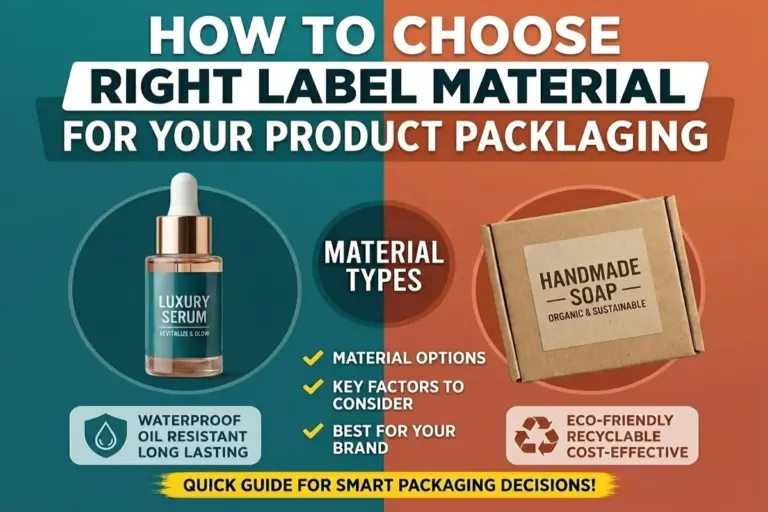
There isn’t one “best” label material, only the best one for your specific product, container, and environment. Here’s what’s actually available, and what each one is built for.
1) Paper Labels, Affordable but Limited
Paper is the most economical substrate and prints beautifully, which is why it’s still common for dry goods, candles, and short-shelf-life products. The tradeoff is durability: standard paper labels tear easily, absorb moisture, and can fade or smear if they’re exposed to condensation, oil, or direct sunlight for long.
Kraft paper has become especially popular for brands chasing a handmade, artisanal look, think craft beverages, candles, and small-batch food products. It carries that warmth beautifully, but it inherits the same moisture vulnerability as standard paper, so it’s best reserved for products that won’t face real water exposure.
2) BOPP Labels, The Durable All-Rounder
BOPP (biaxially oriented polypropylene) has become the default choice for brands that need a label to survive real-world handling without paying premium synthetic prices. It resists moisture, tearing, and oil far better than paper, while still printing with sharp, vibrant detail.
BOPP vs Paper Labels: Side-by-Side Comparison
| Factor | Paper Labels | BOPP Labels |
|---|---|---|
| Cost | Lowest | Moderate |
| Water resistance | Poor | Excellent |
| Tear resistance | Low | High |
| Best for | Dry, short-shelf-life products | Beverages, refrigerated goods, condiments |
| Print finish | Matte, natural look | Glossy or matte, vibrant color |
If your product will ever sit in a fridge, a humid bathroom, or a sweaty cooler, this comparison alone usually settles the decision in BOPP’s favor.
3) Vinyl and Synthetic Labels – Built for Tough Conditions
Vinyl labels flex without cracking, which makes them ideal for curved containers, drums, and products that get handled roughly, think automotive fluids, cleaning chemicals, or outdoor equipment. They resist UV exposure, scuffing, and chemical contact better than almost any other substrate.
4) Polyester (PET) Labels – Premium Durability
When a label needs to survive years, not months, industrial equipment, electronics, and asset tags, polyester is the answer. It’s tear-resistant, temperature-stable, and holds up under extreme conditions where other materials would degrade.
Pressure-Sensitive Labels: Why They Dominate Modern Packaging
Most of the labels you interact with every day are pressure-sensitive labels, no heat, water, or solvent activation required, just firm pressure to bond the label to the surface. They’re fast to apply, work across automated labeling machines, and come in nearly every substrate above.
How Pressure-Sensitive Adhesives Work
A pressure-sensitive label is built in layers: the face stock (what you see and print on), the adhesive layer, and a release liner that protects the adhesive until application. Getting this construction right, face stock paired with the correct adhesive, is what separates a label that lasts from one that fails.
Adhesive Types for Labels: Matching Adhesive to Application
The substrate gets most of the attention, but the adhesive underneath is just as important. Choosing the wrong one of these adhesive types for labels is one of the most common and costly mistakes brands make.
1) Permanent Adhesive
Designed to bond for the life of the product. Once applied, it’s not meant to come off cleanly, ideal for retail products, food packaging, and anything where label removal would suggest tampering. A very good example is paper stickers
2) Removable Adhesive
Built to peel away cleanly without residue. Useful for promotional labels, pricing stickers, or returnable containers where the label needs to come off without damaging the surface underneath. A very good example is Vinyl stickers (SAV)
3) Freezer-Grade and Specialty Adhesives
Standard adhesives lose their grip in cold, wet, or oily conditions. Freezer-grade adhesives are formulated to stay bonded in sub-zero temperatures and through condensation cycles, essential for frozen food, ice cream, and refrigerated beverages. A very good example is BOPP Stickers
Waterproof Label Material: When Moisture Resistance Is Non-Negotiable
If there’s one factor that determines more label failures than any other, it’s moisture. A waterproof label material, typically BOPP, vinyl, or polyester rather than uncoated paper, is the difference between a label that survives condensation, shipping, and handling, and one that turns into a soggy mess in someone’s grocery bag.
Industries That Can’t Compromise on Water Resistance
- Beverages, condensation on cold bottles and cans
- Frozen and refrigerated food, freezer burn, and surface moisture
- Bath and body products, direct water exposure during use
- Outdoor and industrial goods, rain, humidity, and washdown environments
Matching Label Material to Your Product and Industry
The fastest way to shortlist a material is to start with your industry’s known pain points, rather than browsing every option from scratch.
- Food and beverage: waterproof BOPP or polypropylene, food-grade adhesives, FDA-compliant inks
- Cosmetics and personal care: glossy or matte synthetic labels that resist oils, lotions, and bathroom humidity
- Industrial and chemical: vinyl or polyester with chemical- and UV-resistant adhesives for drums and containers
- E-commerce and retail: durable, scuff-resistant labels that survive shipping, handling, and warehouse storage
A 5-Step Framework for Choosing Your Label Material
- Define the environment. Will it face moisture, cold, heat, oil, or sunlight?
- Know your container surface. Glass, plastic, metal, and curved surfaces all interact differently with adhesives.
- Match the adhesive to the use case. Permanent for retail, removable for promotions, freezer-grade for cold chain.
- Decide on finish and feel. Matte conveys premium and natural; gloss conveys bold and vibrant.
- Confirm machine compatibility. If you’re using automated labeling equipment, the material must run smoothly through it without jamming or misfeeding.
Why Custom Product Label Printing Makes the Difference
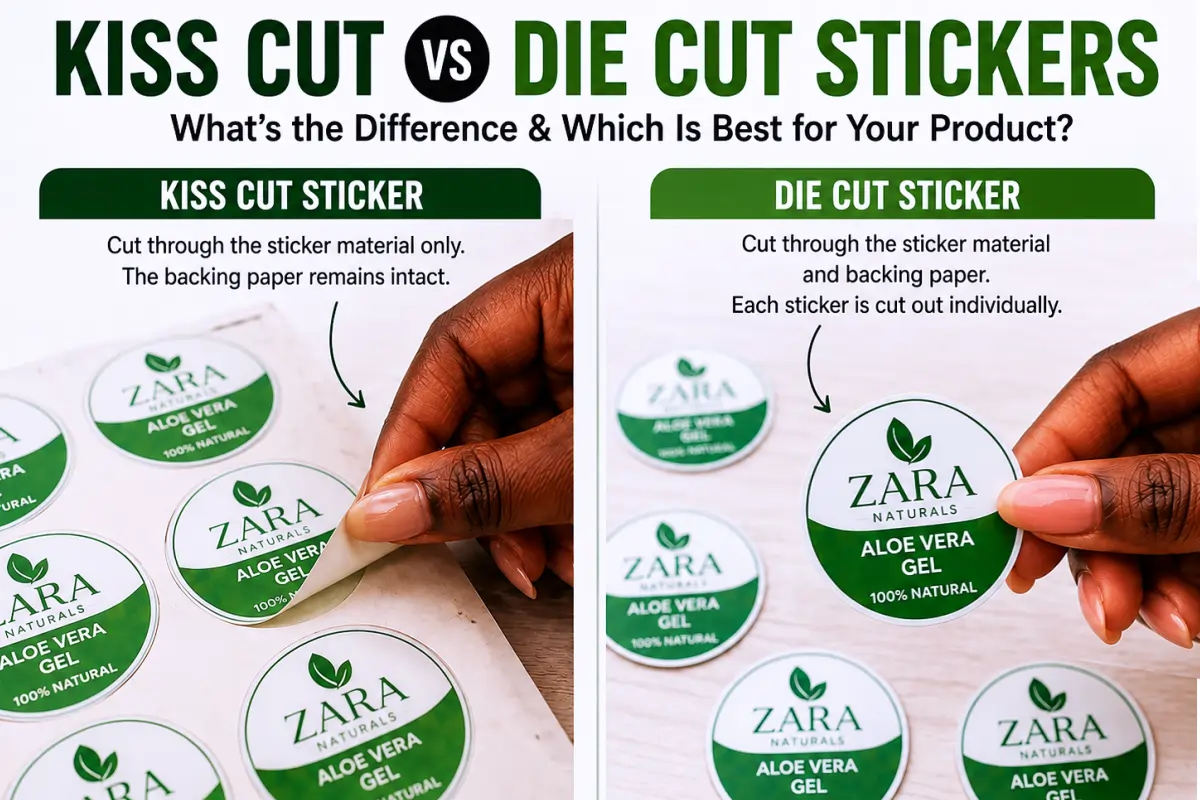
Even the right material can underperform if it’s printed without precision. Custom product label printing allows you to control die-cut shapes that fit your container exactly, lamination or varnish for added scuff and moisture protection, and finishes like foil stamping or embossing that make your packaging feel premium on the shelf.
It also means you’re not stuck choosing between durability and sustainability. Recyclable and biodegradable substrates now perform nearly as well as traditional synthetics, so an eco-conscious choice no longer has to mean a fragile one.
Don’t Underestimate Finish
The finish you choose sends a message before a single word of your label is read. Matte finishes feel natural, premium, and understated, popular with skincare and artisanal food brands. Gloss finishes feel bold, vibrant, and eye-catching, common in beverages and household products. Lamination adds an extra layer of scuff and moisture protection on top of either finish, which is worth the small added cost for anything that will be handled often or stored long-term.
Final Thoughts: Don’t Let Your Label Undo Your Hard Work
You’ve invested time, money, and care into building a product worth buying. The label material for product packaging you choose should protect that investment, not quietly chip away at it one peeling corner or faded barcode at a time. Whether you need waterproof label material for a refrigerated product, the flexibility of pressure-sensitive labels for fast production runs, or a fully custom solution built around your exact container and environment, the right choice is the one that lets your product show up looking as good on day 30 as it did on day one.
Ready to get it right the first time? At Accuxel Prints and Design, we help brands choose and produce the right label material for their exact product, environment, and budget, from waterproof BOPP labels to fully custom die-cut designs with premium finishes. Reach out to us today for a free material consultation and sample pack, and give your packaging the durability your product deserves.