What Is the Best Material for Bottle Water Label Stickers?
Picture this. You just unboxed your first batch of branded bottle water. They look perfect for about a day. Then the fridge condensation hits, or the cooler ice melts, and your labels start curling at the edges like old wallpaper. The colors smear. Your logo looks like it is crying.
If you have ever felt that gut drop moment, you already know why finding the best material for bottle water label stickers is not just a printing detail. It is a brand decision. It is the difference between a customer trusting your product and a customer putting it back on the shelf.
This guide breaks it down in plain, simple terms, so you never have to guess again.
Why the Label Material You Choose Can Make or Break Your Brand
Bottle waters live a hard life. They get iced, shaken, dropped in gym bags, left in hot cars, and squeezed by sweaty hands. Your label has to survive all of that without falling apart.
A weak label does more than look bad. It tells your customer, without saying a word, that the product inside might be just as low quality. People judge fast. A peeling label can lose a sale in two seconds flat.
Think about the last time you picked up two bottles of water at a store, one with a crisp, clean label and one with a label that looked tired and curled at the edge. Most people will reach for the crisp one without even thinking about why. That split second reaction is happening to your product every single day, on every shelf, in every cooler.
The good news is that once you understand a few simple facts about label materials, you can pick one with full confidence and never worry about this again.
The Main Types of Label Materials for Bottled Waters
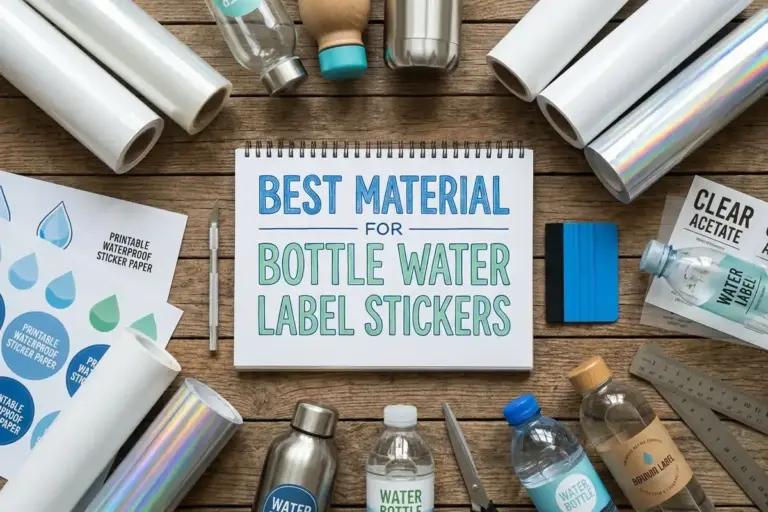
There are a handful of materials used for bottled water labels. Each one acts differently when it gets wet, cold, or rubbed.
1) BOPP Labels
BOPP stands for a type of strong, clear plastic film. Think of it like a thin, flexible sheet of plastic that bends but does not tear easily. It is one of the most popular choices for waterproof label stickers for bottled water, and for good reason.
BOPP handles moisture, ice, and condensation without flinching. It keeps your colors sharp and your edges clean, even after sitting in a cooler full of melting ice for hours.
2) PE Film Labels
PE, or polyethylene, is another flexible plastic film. It feels a bit softer and stretchier than BOPP. This makes it a smart pick for bottles with curves, since the label can hug the shape without wrinkling.
PE film also handles water-resistant adhesive labels very well, which matters when your bottle is going to be splashed, squeezed, or tossed in a cooler.
3) Vinyl Labels
Vinyl is thick, tough, and built for the long haul. If your bottles are heading outdoors, into direct sun, or onto store shelves for months at a time, vinyl can take the beating.
It costs a bit more, but it rarely cracks, fades, or peels, even under rough conditions.
4) Paper Labels (And Why They Often Let You Down)
Paper labels look classic and feel nice in the hand, but water and paper are simply not friends. The moment condensation builds up, the paper starts to bubble, wrinkle, and tear.
Unless your paper label has a heavy plastic coating, it is rarely the right fit for anything that touches ice, moisture, or humidity. We mention it here so you know what to avoid, not what to choose.
Adhesive Matters Just as Much as the Material
Here is something a lot of brand owners miss. The sticker material is only half the story. What is underneath it, the glue, plays just as big a role.
Permanent Adhesive
This is the strong stuff. Once it sticks, it stays stuck, even through condensation, shaking, and rough handling. This is the right choice for single use retail bottled waters that should never come apart.
Removable or Wash-Off Adhesive
If your bottles are meant to be reused or refilled, you want a label that can be peeled off cleanly or washed away without leaving a sticky mess behind. This keeps your customers happy and your brand looking thoughtful.
Finish Options That Protect Your Label (and Your Brand)
The finish on top of your label acts like a raincoat. It is the layer that takes the daily hits, so your design underneath stays clean and sharp.
- Gloss laminate: Bright, shiny, and eye-catching on shelves
- Matte laminate: Soft, modern look that resists fingerprints
- Clear laminate with UV-resistant ink: Keeps colors from fading in sunlight
A label without the right finish is like sending someone outside in the rain with no jacket. It might survive, but why take that risk with your brand?
What About Eco-Friendly and Food-Safe Requirements?
Today’s customers care about what touches their food and drinks, and what happens to packaging after they are done with it.
Look for label material that is food grade or food contact safe, meaning it has been tested and approved to sit next to something people drink. Many BOPP and PE options also come in recyclable versions, so you can protect your bottles and the planet at the same time.
Shrink Sleeves vs Pressure-Sensitive Labels: A Quick Comparison
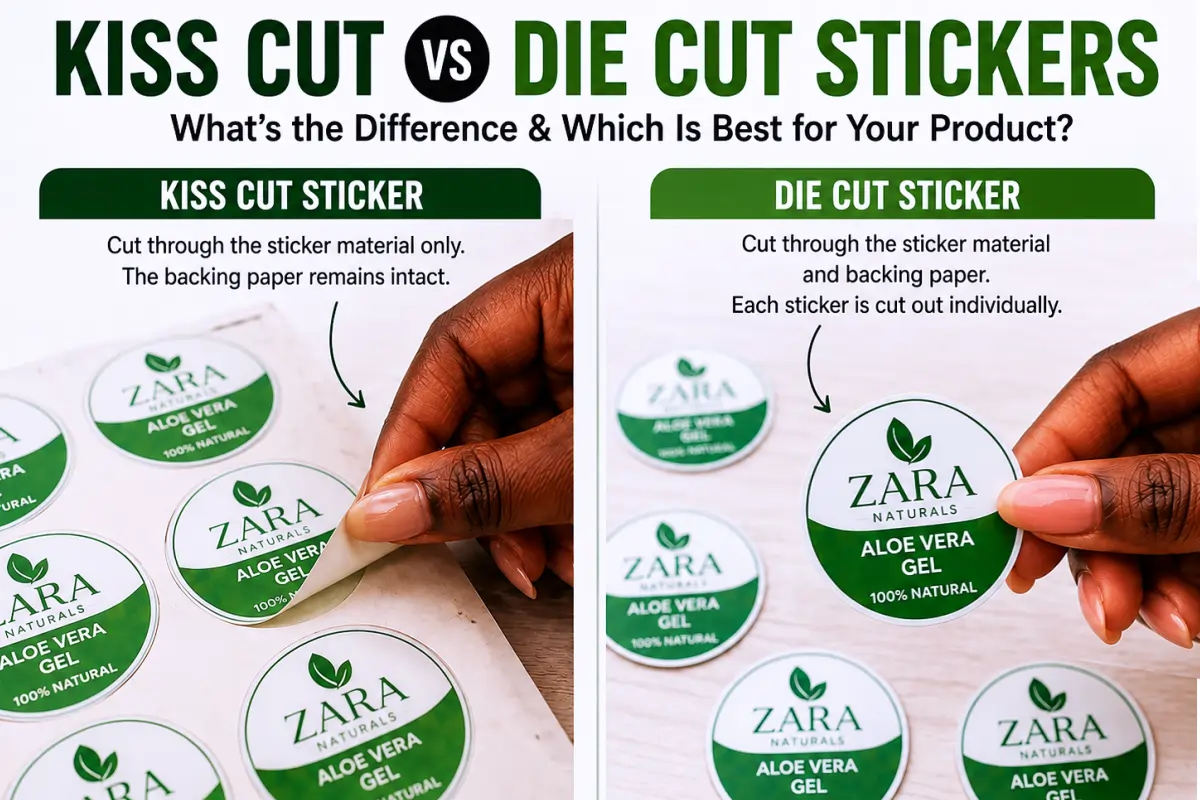
Shrink sleeves wrap fully around the bottle and shrink to fit with heat. They cover more space and create a bold, all-around look.
Pressure-sensitive stickers, the kind we have been talking about throughout this whole guide, are simpler to apply, often cheaper for smaller runs, and easier to swap out if you update your design later.
For most bottled water brands, especially smaller and growing ones, custom bottled water label material in sticker form is the simpler, smarter, and more budget-friendly path.
How to Choose the Best Material for Your Bottle Water Labels
Here is a simple way to make your decision without the headache.
- Think about where your bottle will live. Fridge, cooler, gym bag, car, store shelf? Each one tells you how much moisture and heat resistance you need.
- Decide if the bottle is single-use or reusable. This tells you whether you need permanent or removable adhesive.
- Pick a material built for condensation resistance. BOPP or PE film almost always wins here over paper.
- Choose a finish that matches your brand. Gloss for bold and fun, matte for clean and modern.
- Confirm it is food-safe and, if it matters to your customers, recyclable.
Follow these five steps, and you will land on the right material almost every time.
A Few Common Mistakes to Avoid
Most brand owners do not set out to choose a bad label. They simply do not know what to ask their printer, and they end up with whatever is cheapest or fastest. A few slip-ups worth avoiding:
- Choosing paper because it feels premium, without checking how it holds up near ice or condensation
- Picking a gloss finish because it looks nice in a photo, without testing it under real fridge conditions
- Going with a permanent adhesive on a reusable bottle, which leaves a sticky residue that your customers will not love
- Skipping a food safety check, which can become a real problem if your product is ever reviewed or audited
Avoiding these small mistakes early saves you money, time, and a few embarrassing customer emails down the road. A small but mighty step many brands forget is testing a sample batch before a full print run, so you can see how the label behaves on your exact bottle before committing to thousands of units.
The Real Cost of Choosing the Wrong Label Material
A cheap label might save you a few cents per bottle today. But a peeling, faded, or blurry label can cost you something much bigger: your customer’s trust.
People remember brands that look put together. They also remember the ones that look like they did not care enough to get the basics right. Your label is often the very first thing a customer touches and judges before they ever take a sip.
Choosing the right material is not just a printing choice. It is a quiet promise to every person who picks up your bottle that you care about quality, down to the smallest detail.
Quick Answers to Common Questions
Q) Do BOPP labels work for both hot and cold drinks?
A) Yes. BOPP handles a wide range of temperatures well, which is part of why it remains a top choice across the beverage world, from chilled water to drinks stored at room temperature.
Q) Is vinyl too expensive for a small or growing brand?
A) Vinyl does cost more than BOPP or PE film, but for brands that need their bottles to survive long outdoor events, sun exposure, or extended shelf time, the extra durability often pays for itself.
Q) Can I switch label material later if my first choice does not work out?
A) Absolutely. Many brands start with one material, learn from real world feedback, and adjust. A good printing partner will help you test and compare before your next run, so you only pay for what actually works.
Final Thoughts
The best material for bottle water label stickers comes down to where your bottle goes, how it gets used, and how much your brand image matters to you, and it should matter a lot. For most bottle water brands, a BOPP or PE film label with the right adhesive and finish gives you the strongest mix of durability, looks, and value.
You have worked hard to build a brand people trust. Do not let a flimsy label undo that in one melted ice bucket.
There is no single perfect answer for every brand, but there is a perfect answer for your bottle, your budget, and your customers. Taking a little extra time now to choose the right material means you get to spend less time worrying later, and more time watching your brand grow.
Let’s Get Your Labels Right, the First Time
At Accuxel Prints and Design, we help beverage brands choose the exact material, adhesive, and finish that fits their bottles and their budget. No guesswork, no jargon, just labels that hold up and look sharp from day one.
Reach out to us today, and let’s create bottle water labels that work as hard as you do.