Which Labels Are Best for Pouches? The Honest Guide Every Brand Owner Needs
You finally got your product into a beautiful stand-up pouch. The bag looks great on the shelf. Then, a week later, the label starts to peel at the corner. Or it fades after sitting near a window. Or it smudges the moment someone’s hand gets a little damp.
That tiny sticker is doing a huge job. It is your name, your story, and your promise to the customer, all in one small space. So if you have been searching for the best labels for pouches, you are asking the right question at the right time, before you spend money on something that will not hold up.
Most people do not think about labels until something goes wrong. By then, you have already paid for the print run, packed the bags, and maybe even shipped some out. Fixing it after the fact costs time, money, and a little bit of your reputation, too.
The good news is that this decision is not as complicated as it sounds once someone breaks it down for you. Let’s walk through this together, in plain language, so you can make a choice you will not regret.
Why Your Label Choice Can Make or Break Your Pouch Packaging
Think about the last time you picked up a bag of coffee or a pouch of pet treats. What did you notice first? Probably not the bag itself. You noticed the label.
A label is the first handshake between your brand and a stranger. If it looks cheap, peeling, or faded, people quietly assume the product inside is cheap too, even if that is not true. They may never say it out loud. They will just put the bag back down and pick up someone else’s instead.
This is why pouch labeling materials matter so much more than most new brand owners expect. The wrong choice does not just look bad. It can quietly cost you sales every single day.
The Real Difference Between Label Materials (No Jargon, We Promise)
There are a few main types of labels used on pouches today. Each one has its own strengths and its own weak spots. Let’s go through them one by one, like two friends gisting.
BOPP Labels: The All-Around Winner for Pouches
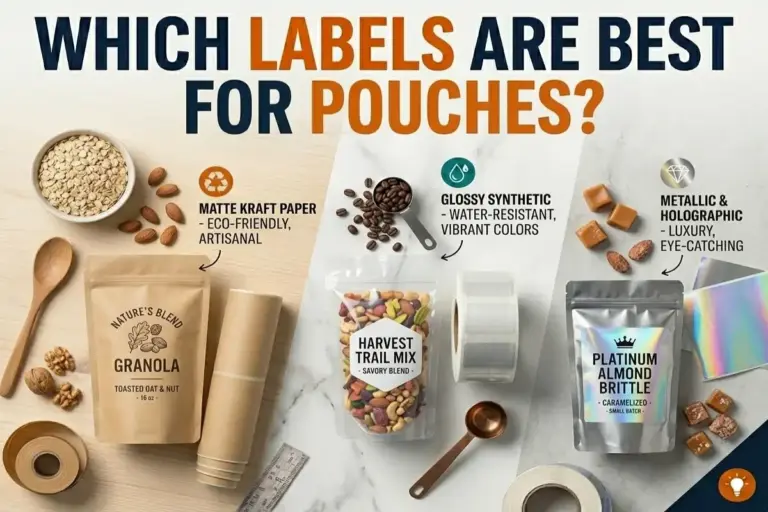
BOPP stands for a type of stretchy, thin plastic film. You do not need to remember the long name. Just know this: BOPP labels for pouches are the most popular choice in the packaging world right now, and for good reason.
They bend and flex with the pouch instead of cracking or lifting. They handle moisture well. They print beautifully, with colors that pop and stay sharp. If you want a label that looks premium without costing a fortune, this is usually your best starting point.
Most snack brands, coffee roasters, and supplement companies you see on store shelves are already using this material, even if they never mention it. It has become the quiet industry standard for a reason. It simply works in more situations than anything else on this list.
Paper Labels: Cheap But Risky
Paper labels are the cheapest option, and that is exactly why so many beginners reach for them first. But pouches move. They get squeezed, tossed in bags, and sometimes get a little wet from condensation or a spill.
Paper does not love any of that. It can wrinkle, tear, or soak up moisture and start to peel. If your product will sit in a fridge, freezer, or anywhere near liquid, paper is a risk you probably do not want to take.
Vinyl Labels: Tough as Nails
Vinyl labels are built for rough conditions. They resist scratches, sunlight, and rubbing better than almost anything else on this list. You will often see them used outdoors or on products that get handled a lot.
The tradeoff is cost. Vinyl tends to be pricier than BOPP, so it makes the most sense when your pouch is going somewhere extreme, like outdoor gear, garden products, or anything exposed to heavy sunlight.
PET (Polyester) Labels: For When You Need Extra Shine and Strength
PET labels bring a clear, glossy, almost glass-like shine. They are strong, they resist tearing, and they hold up well over time. Many premium skincare and beverage brands choose PET when they want that extra bit of shelf appeal.
If your brand is going for a high-end, eye-catching look, this material is worth a serious look.
Adhesive Matters Just as Much as the Label Itself
Here is something a lot of people miss. The label material is only half the story. The glue holding it on, called the adhesive, decides whether your label stays put or slides right off.
Pouches are made from flexible film, which behaves very differently than glass jars or rigid plastic bottles. That is why pressure-sensitive labels for flexible packaging are built a little differently than standard labels. They need to bend with the bag, not fight against it.
Permanent Adhesive vs Removable Adhesive
A permanent adhesive sticks for good. Once it is on, it stays on, even through rough handling, cold storage, or shipping. Most pouch products use this kind, because nobody wants their label falling off in transit.
A removable adhesive can be peeled away cleanly. This is less common for pouches, but it shows up on promotional stickers, limited editions, or anything meant to come off later without leaving a sticky mess behind.
Matching the Label to Your Pouch Type
Not every pouch faces the same challenges. A bag of rice seeds and a pouch of frozen smoothie mix live very different lives. Let’s match the label to the job.
Stand-Up Pouches (Food, Coffee, Snacks)
These get handled constantly in stores and at home. BOPP labels work beautifully here because they flex with the bag every time someone picks it up, squeezes it, or stands it back on the shelf.
Spouted Pouches (Drinks, Sauces, Baby Food)
These often get a little messy around the spout. You want something that resists drips and spills without lifting at the edges. A strong, moisture-resistant BOPP or PET label is your friend here.
Frozen or Refrigerated Pouches
This is where things get tricky. Condensation forms on cold packaging, and weak labels lift right off when they get damp. If your product lives in a freezer or fridge, you need waterproof labels for stand-up pouches, no exceptions. Skipping this step is one of the fastest ways to end up with labels floating off in a grocery store freezer.
Cosmetic and Personal Care Pouches
These pouches often get touched with oily or wet hands, lotion, sunscreen, you name it. A glossy PET or BOPP label with a strong permanent adhesive keeps things looking clean and intact, even after daily use.
5 Costly Mistakes Brands Make When Choosing Pouch Labels
Even smart, careful business owners fall into these traps. Here is what to watch for before you place your order.
- Choosing paper to save money, then losing way more in reprints and customer complaints later.
- Ignoring how the pouch will be stored, like assuming a fridge item does not need a moisture-proof label.
- Picking a pretty design without testing the adhesive, only to find it peels within a week.
- Forgetting that custom pouch labels need to flex , not just sit flat like a label on a box.
- Going with the cheapest printer instead of the most reliable one, and ending up with blurry colors or uneven cuts.
Each of these mistakes feels small in the moment. Together, they can quietly drain your budget and your customers’ trust.
How to Choose the Best Labels for Pouches in 4 Simple Steps
You do not need a packaging degree to get this right. Just walk through these four questions.
- Where will your product live? Room temperature, fridge, freezer, or outdoors all call for different materials.
- How will customers handle it? Frequent touching, oily hands, or rough shipping all point toward tougher materials like BOPP, vinyl, or PET.
- What look matches your brand? Glossy and premium, soft and matte, or bold and colorful, your label should feel like an extension of your product.
- Who is printing it? Even the best material in the world looks bad with poor printing. The right partner matters just as much as the right material.
Take your time with these four questions before you place a big order. A short conversation now can save you from a costly reprint later, and it gives you something far more valuable than a quick decision. It gives you confidence that your packaging will hold up the moment it leaves your hands.
Frequently Asked Questions About Pouch Labels
Q) Are BOPP labels waterproof?
Yes. BOPP labels naturally resist moisture, which is one of the biggest reasons they are the go-to choice for stand-up pouches, frozen food bags, and drink pouches.
Q) Can I use paper labels on a stand-up pouch?
You can, but it is risky if the pouch will ever get wet, cold, or handled roughly. Paper works best for dry, shelf-stable products that customers will not squeeze or store in a fridge.
Q) Do custom pouch labels cost more than standard ones?
Custom shapes, finishes, and sizes can add a small cost, but the difference is usually smaller than people expect. A label that matches your brand and actually stays on the pouch is almost always worth that small extra investment.
Q) What is the best label for a frozen food pouch?
A BOPP or PET label with a strong permanent adhesive is the safest choice. These materials resist the condensation and temperature swings that cause weaker labels to lift and peel.
Final Thoughts: Your Label Is Your Brand’s Handshake
At the end of the day, this is not really about plastic versus paper, or one adhesive versus another. It is about trust. A label that peels, fades, or smudges quietly tells your customer that maybe the product inside cannot be trusted either.
A label that holds strong, looks sharp, and feels intentional does the opposite. It says, without a single word, that you care about quality. That feeling is what turns a first-time buyer into someone who comes back again and again.
Choosing the best labels for pouches is not a small detail. It is one of the most important decisions you will make for your brand.
If you want a second pair of expert eyes on your packaging before you commit, we would love to help. Reach out to us at Accuxel Prints and Design and let’s find the perfect label material, adhesive, and finish for your pouches together. Your product deserves packaging that works as hard as you do.